
Endoscopy
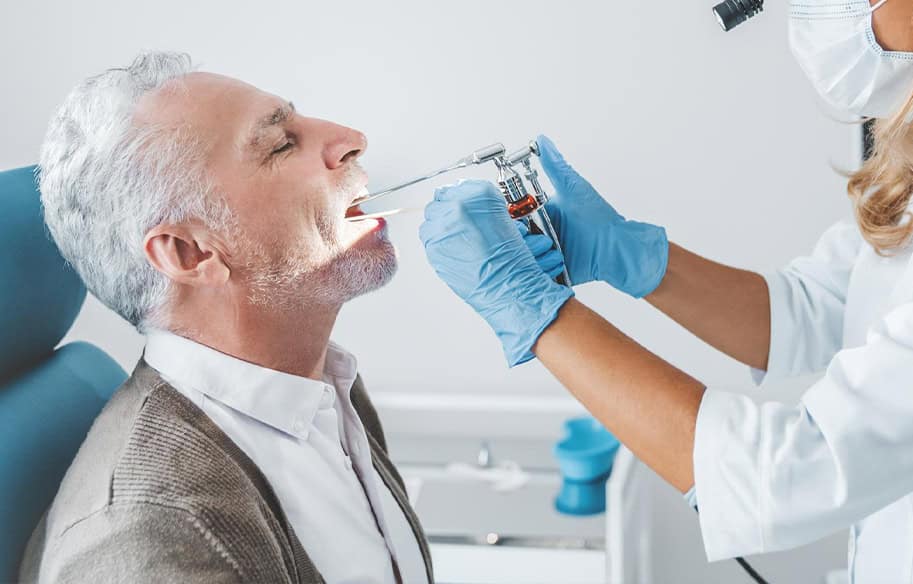
Endoscopy is a diagnostic procedure used to examine the inside of the nose, throat, and upper airway in more detail. Dr. Ervin Dyrmishi uses endoscopy to better understand symptoms and create a more accurate treatment plan.
What Is Endoscopy?
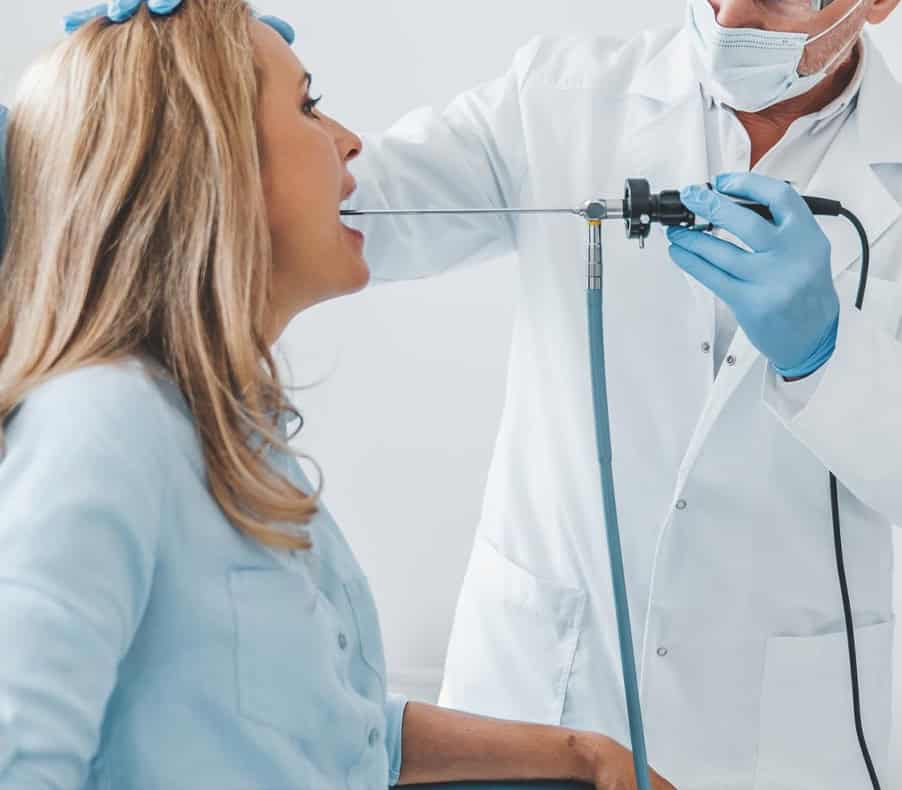
Endoscopy is a procedure that uses a thin camera to view areas that cannot be seen clearly during a standard ENT examination. In ENT care, it is often used to examine the nasal passages, sinuses, throat, voice box, and upper airway. This procedure can help diagnose conditions such as nasal blockage, sinus problems, polyps, throat irritation, voice changes, swallowing concerns, breathing problems, nosebleeds, and suspicious growths. It gives the doctor a clearer view of inflammation, swelling, structural problems, mucus drainage, lesions, or other abnormalities.
Is Endoscopy
RIGHT FOR YOU?
Endoscopy may be recommended if your symptoms cannot be fully explained with a regular examination. It is especially useful when the concern involves the deeper nasal passages, throat, larynx, or upper airway.
You may be a candidate if you have chronic nasal congestion, sinus pressure, frequent nosebleeds, postnasal drip, hoarseness, throat discomfort, swallowing difficulty, breathing changes, or a feeling of something stuck in the throat. Endoscopy may also be recommended if Dr. Dyrmishi needs to check for nasal polyps, vocal cord problems, airway narrowing, tumors, or other structural concerns.
The procedure is done to get a clearer and more detailed view of the nasal passage or throat. It helps confirm a diagnosis, understand the cause of symptoms, guide treatment decisions, and decide whether medication, further testing, imaging, biopsy, or surgery may be needed.
How it Works
Endoscopy is usually a quick in-office diagnostic procedure that helps Dr. Dyrmishi examine the nasal passages or throat with greater detail. The process is designed to be as comfortable as possible while providing important information about your condition.

- Symptom review and preparation — Dr. Dyrmishi begins by reviewing your symptoms and explaining the procedure. In some cases, a local numbing spray or decongestant may be used to make the examination more comfortable.
- Camera examination — A thin flexible or rigid camera is gently guided through the nose or used to examine the throat. This allows Dr. Dyrmishi to see areas that are not visible during a standard examination.
- Detailed assessment — During the examination, the doctor checks for inflammation, swelling, polyps, mucus drainage, vocal cord movement, airway narrowing, bleeding sources, or suspicious tissue changes.
- Diagnosis and next steps — After the endoscopy, Dr. Dyrmishi explains the findings and recommends the most appropriate next step. This may include medication, allergy care, imaging, biopsy, follow-up monitoring, or a specific treatment procedure.
Ready to Book Your Consultation?
Tell us more about your concerns and the service you are interested in. Our team will contact you to schedule your consultation with Dr. Ervin Dyrmishi and provide a free quote for your case.

I visited Dr. Ervin Dyrmishi for ongoing nasal blockage and breathing difficulty. He explained everything clearly, performed a detailed examination, and helped me understand the right treatment options. I felt listened to and confident throughout the process.
My consultation was very professional from start to finish. Dr. Dyrmishi took the time to understand both my medical concerns and aesthetic goals. His approach felt careful, honest, and very personalized.
I came in for sinus problems that had been affecting me for a long time. Dr. Dyrmishi was thorough, calm, and very clear in explaining the diagnosis and next steps. The whole experience made me feel much more comfortable.
I was nervous before my facial procedure, but Dr. Dyrmishi explained the treatment plan in detail and answered all my questions. I appreciated his focus on natural results and making sure everything suited my face.
We brought our child for recurring ear and throat problems, and the consultation was excellent. Dr. Dyrmishi was patient, gentle, and explained everything in a way we could understand. We felt reassured and well guided.
Dr. Dyrmishi combines professionalism with a very human approach. He carefully reviewed my symptoms, explained the examination findings, and gave me a clear plan for treatment. I would highly recommend him.
Our Patients in Their Own Words
Why Choose Dr. Ervin Dyrmishi?
Dr. Ervin Dyrmishi brings together a strong medical background, advanced ENT and head and neck surgery training, and a refined understanding of facial anatomy and aesthetics. He graduated magna cum laude with a joint medical degree from the University “Our Lady of Good Counsel” in Tirana and the University of Rome “Tor Vergata,” and has continued his professional development through international courses in aesthetic and functional septorhinoplasty, rhinology, otology, temporal bone surgery, and head and neck surgery.
His clinical experience includes ENT emergency care, microsurgery, surgical patient management, head and neck procedures, and daily diagnostic evaluation, giving patients a careful, structured, and well-rounded approach to both medical and aesthetic care.
Let’s Make Your Beauty Journey Simple
Faqs
Frequently Asked Questions
ENT endoscopy is usually not painful, although some patients may feel mild pressure, tickling, or temporary discomfort. If the nose or throat is sensitive, a numbing spray may be used to make the procedure easier. Most patients tolerate the examination well and can return to normal activities afterward.
Yes. A throat or laryngeal endoscopy can help examine the vocal cords and how they move. This is especially useful for patients with hoarseness, voice changes, throat discomfort, chronic cough, or suspected vocal cord weakness, nodules, inflammation, or paralysis.
The actual camera examination usually takes only a few minutes, although the full appointment may take longer because Dr. Dyrmishi will review your symptoms, perform an examination, and explain the findings. The procedure gives useful information quickly and can often help avoid delays in diagnosis.
Sometimes. Endoscopy allows the doctor to directly view the nasal passages or throat, but imaging such as a CT scan or MRI may still be needed to see deeper structures, sinus anatomy, tumors, or areas outside the camera’s view. Dr. Dyrmishi will recommend imaging only when it adds important information for diagnosis or treatment planning.
Contact us now!
Book Your Appointment Today
Take the first step toward clearer breathing, improved comfort, or a refined aesthetic result. Dr. Ervin Dyrmishi provides personalized consultations for ENT, head and neck, plastic, and facial aesthetic surgery concerns.
Call +355694069847 or fill out the form to schedule your consultation.
Interested in ENT, Head and Neck, or Plastic Surgery Care?
Tell us more about your concerns and the service you are interested in. Our team will contact you to schedule your appointment and guide you through the next steps.
