
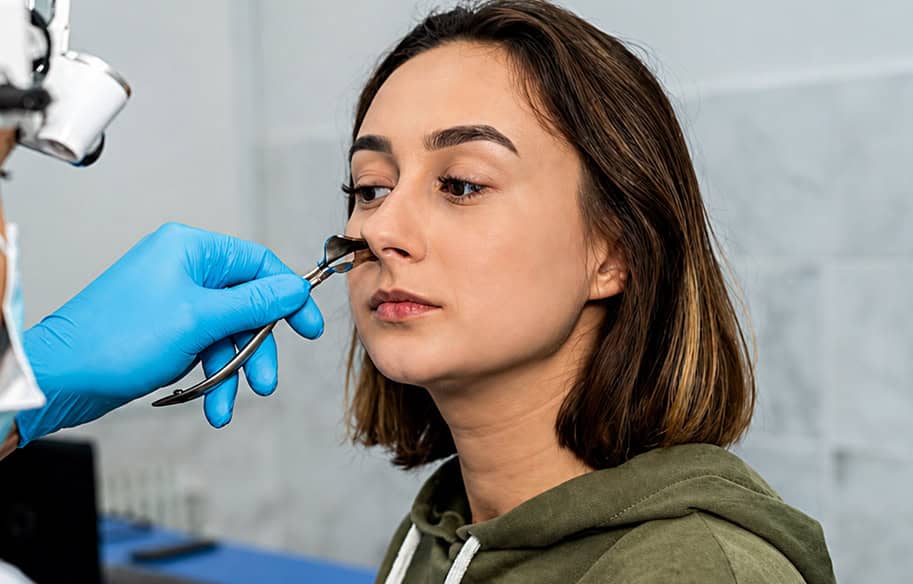
Nasal Obstruction: Septoplasty and Turbinate Reduction
Nasal obstruction is one of the most common complaints seen in ENT practice — and one of the most treatable. Whether caused by a deviated septum, enlarged turbinates, or both, chronic nasal blockage has a direct and measurable impact on sleep, energy, concentration, and quality of life.
What Is Nasal Obstruction Treatment?
Nasal obstruction occurs when the internal structures of the nose physically restrict airflow through one or both passages. The two most common structural causes are a deviated septum — where the central wall of the nose is displaced to one side — and enlarged turbinates, the bony structures inside the nose that regulate airflow and can become chronically swollen. Septoplasty corrects the deviated septum, while turbinate reduction reduces the size of the turbinates to widen the nasal passage. The two procedures are frequently performed together for a comprehensive restoration of nasal airflow.
Is This Treatment
RIGHT FOR YOU?
Nasal obstruction is often so gradual in onset that many patients have simply adapted to breathing poorly without realising it. The following will help you determine whether a formal assessment may be right for you.
Good candidates are patients who experience persistent difficulty breathing through the nose — particularly on one side — that has not responded adequately to nasal sprays, antihistamines, or other conservative treatments. A clinical examination is required to confirm the structural cause of obstruction before surgery is recommended. Candidates should be in good general health and, where possible, non-smokers or willing to quit ahead of any procedure.
Chronic nasal obstruction forces patients to breathe through their mouth, disrupts sleep, contributes to snoring, and can significantly reduce day-to-day energy and concentration. Surgery is recommended when the obstruction is structural in nature — meaning it cannot be resolved by medication alone — and when the impact on a patient’s quality of life makes correction both appropriate and worthwhile.
How it Works
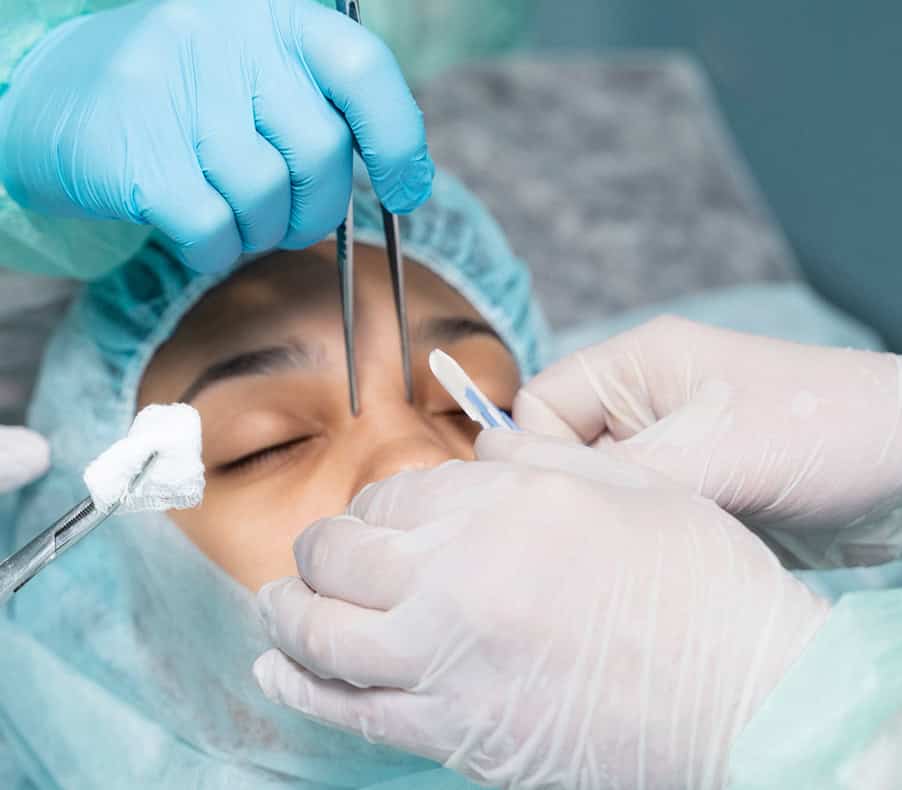
Both septoplasty and turbinate reduction are performed under general anaesthesia, entirely through the nostrils, with no external incisions or visible scarring. They are commonly performed together as a single procedure. Here is what the process looks like:

- Consultation and planning — Dr. Dyrmishi performs a thorough nasal examination including endoscopy to identify the precise structural causes of obstruction and determine whether septoplasty, turbinate reduction, or both are required.
- The surgery — The deviated portion of the septal cartilage and bone is carefully reshaped and repositioned to centralise the septum, while the turbinates are reduced in size using precise surgical techniques that preserve their important humidifying and filtering function.
- Immediate recovery — Congestion and mild discomfort are expected in the first week; internal splints may be placed to support healing, and most patients return to work within seven to ten days.
- Long-term results — Most patients notice a meaningful improvement in nasal airflow within two to three weeks as post-operative swelling resolves, with the full benefit of the restored airway apparent at six to eight weeks.
Ready to Book Your Consultation?
Tell us more about your concerns and the service you are interested in. Our team will contact you to schedule your consultation with Dr. Ervin Dyrmishi and provide a free quote for your case.

I visited Dr. Ervin Dyrmishi for ongoing nasal blockage and breathing difficulty. He explained everything clearly, performed a detailed examination, and helped me understand the right treatment options. I felt listened to and confident throughout the process.
My consultation was very professional from start to finish. Dr. Dyrmishi took the time to understand both my medical concerns and aesthetic goals. His approach felt careful, honest, and very personalized.
I came in for sinus problems that had been affecting me for a long time. Dr. Dyrmishi was thorough, calm, and very clear in explaining the diagnosis and next steps. The whole experience made me feel much more comfortable.
I was nervous before my facial procedure, but Dr. Dyrmishi explained the treatment plan in detail and answered all my questions. I appreciated his focus on natural results and making sure everything suited my face.
We brought our child for recurring ear and throat problems, and the consultation was excellent. Dr. Dyrmishi was patient, gentle, and explained everything in a way we could understand. We felt reassured and well guided.
Dr. Dyrmishi combines professionalism with a very human approach. He carefully reviewed my symptoms, explained the examination findings, and gave me a clear plan for treatment. I would highly recommend him.
Our Patients in Their Own Words
Why Choose Dr. Ervin Dyrmishi?
Dr. Ervin Dyrmishi brings together a strong medical background, advanced ENT and head and neck surgery training, and a refined understanding of facial anatomy and aesthetics. He graduated magna cum laude with a joint medical degree from the University “Our Lady of Good Counsel” in Tirana and the University of Rome “Tor Vergata,” and has continued his professional development through international courses in aesthetic and functional septorhinoplasty, rhinology, otology, temporal bone surgery, and head and neck surgery.
His clinical experience includes ENT emergency care, microsurgery, surgical patient management, head and neck procedures, and daily diagnostic evaluation, giving patients a careful, structured, and well-rounded approach to both medical and aesthetic care.
Let’s Make Your Beauty Journey Simple
Faqs
Frequently Asked Questions
This is determined through a clinical nasal examination and endoscopy, which allow Dr. Dyrmishi to directly visualise the internal structures of the nose and identify the precise cause or causes of obstruction. In many patients, both a deviated septum and enlarged turbinates are present and contributing — which is why a thorough assessment before any surgical recommendation is essential.
Septoplasty produces permanent structural correction of the septum. Turbinate reduction results are also long-lasting, though turbinates can re-enlarge over time in patients with ongoing allergies or chronic inflammation — making management of any underlying conditions an important part of long-term care. Dr. Dyrmishi will advise on any additional treatments that may help maintain the surgical result.
No. Turbinate reduction is performed carefully to reduce volume while preserving the turbinate’s important role in warming, humidifying, and filtering the air you breathe. Over-aggressive turbinate reduction — a condition known as empty nose syndrome — is a well-recognised risk of poorly performed surgery, which is why the procedure requires an experienced hand. Dr. Dyrmishi’s approach is always conservative and function-preserving.
Yes. Septoplasty and turbinate reduction are frequently combined with FESS for patients who also have chronic sinusitis, and can be incorporated into a septorhinoplasty for patients who also wish to address the appearance of their nose. Combining procedures allows all contributing issues to be addressed in a single operation and recovery period, which is both more efficient and more comfortable for the patient.
Contact us now!
Book Your Appointment Today
Take the first step toward clearer breathing, improved comfort, or a refined aesthetic result. Dr. Ervin Dyrmishi provides personalized consultations for ENT, head and neck, plastic, and facial aesthetic surgery concerns.
Call +355694069847 or fill out the form to schedule your consultation.
Interested in ENT, Head and Neck, or Plastic Surgery Care?
Tell us more about your concerns and the service you are interested in. Our team will contact you to schedule your appointment and guide you through the next steps.
