
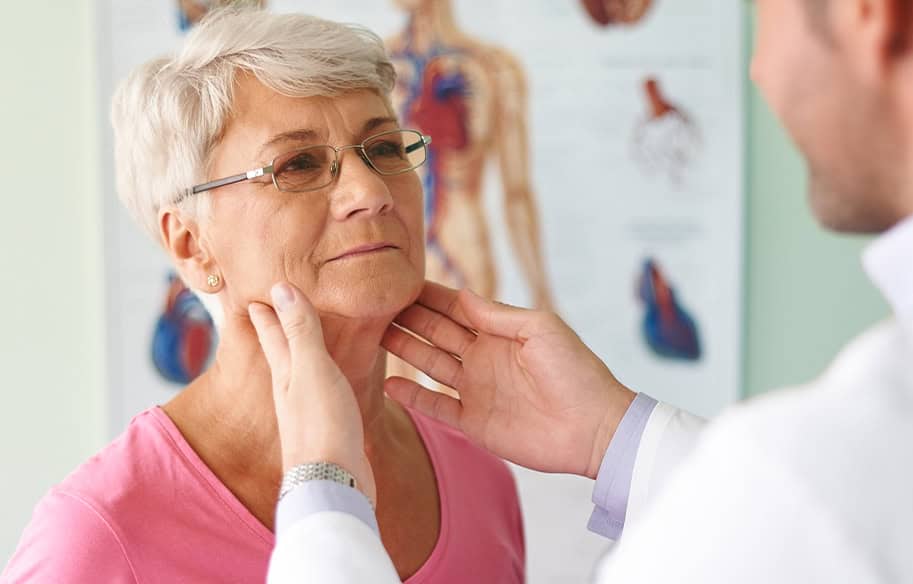
Thyroid Problems
The thyroid gland plays a central role in regulating metabolism, energy, and overall hormonal balance — yet thyroid problems are among the most commonly misdiagnosed and undertreated conditions in medicine. When a thyroid disorder requires surgical management, the precision and experience of your surgeon are everything.
What Are Thyroid Treatments?
The thyroid is a butterfly-shaped gland at the front of the neck that produces hormones regulating a wide range of bodily functions. Thyroid problems requiring surgical assessment and management include benign nodules and cysts, goitre — abnormal enlargement of the gland — hyperthyroidism that has not responded to medical treatment, and thyroid cancer. Surgical options range from the removal of part of the gland (hemithyroidectomy) to total thyroidectomy, depending on the nature and extent of the condition. Dr. Dyrmishi works closely with endocrinologists and oncologists to ensure every patient receives a fully coordinated, expert standard of care.
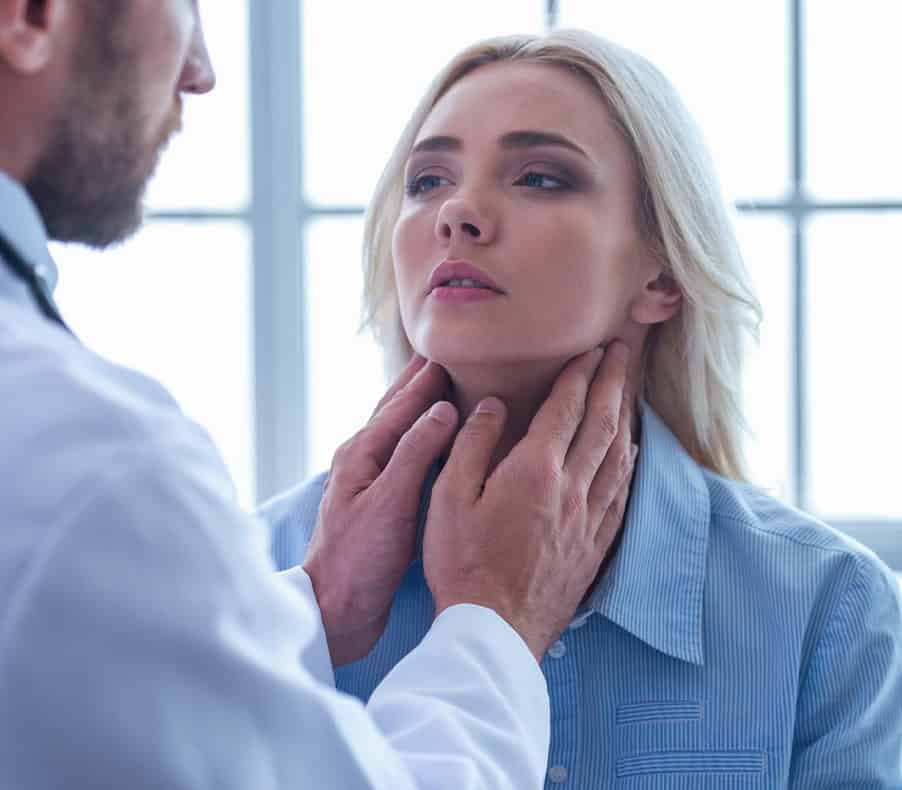
Is This Treatment
RIGHT FOR YOU?
Not all thyroid conditions require surgery — but when they do, choosing a surgeon with specialist head and neck expertise is essential. The following will help you determine whether a surgical assessment may be appropriate for your situation.
Patients with a thyroid nodule or goitre causing compressive symptoms — such as difficulty swallowing, a sensation of pressure in the neck, or breathing difficulties — are candidates for surgical assessment. Those with a nodule that has demonstrated suspicious features on ultrasound or biopsy, a confirmed diagnosis of thyroid cancer, or hyperthyroidism not adequately controlled by medication or radioiodine should also be assessed by a specialist surgeon.
Thyroid surgery is performed to remove tissue that is causing compressive symptoms, to obtain a definitive diagnosis where biopsy results are inconclusive, or to treat thyroid cancer with curative or disease-controlling intent. In some patients, surgery is the most appropriate management for hyperthyroidism when other treatments have failed or are not suitable. The goal in all cases is the safest, most complete treatment of the thyroid condition with the lowest possible risk to surrounding structures.
How it Works
Thyroid surgery requires meticulous precision — the gland sits in close proximity to the parathyroid glands and the recurrent laryngeal nerves, which control vocal cord movement. Dr. Dyrmishi’s specialist head and neck training ensures these critical structures are identified and protected throughout every procedure. Here is what the process looks like:

- Consultation and planning — Dr. Dyrmishi reviews your thyroid ultrasound, blood results, biopsy findings, and symptoms to determine the most appropriate surgical approach, working in close collaboration with your endocrinologist or referring physician.
- The surgery — A carefully placed incision in a natural skin crease of the neck allows access to the thyroid gland; the affected portion or entire gland is then removed with precise dissection to protect the surrounding nerves and parathyroid glands throughout.
- Immediate recovery — Most patients stay in hospital for one to two nights following thyroidectomy; a drain may be placed temporarily, and the neck feels tender and stiff for the first one to two weeks as healing progresses.
- Long-term management — Patients who undergo total thyroidectomy require lifelong thyroid hormone replacement medication; those who have a partial removal are monitored to assess whether the remaining gland produces sufficient hormone independently.
Ready to Book Your Consultation?
Tell us more about your concerns and the service you are interested in. Our team will contact you to schedule your consultation with Dr. Ervin Dyrmishi and provide a free quote for your case.

I visited Dr. Ervin Dyrmishi for ongoing nasal blockage and breathing difficulty. He explained everything clearly, performed a detailed examination, and helped me understand the right treatment options. I felt listened to and confident throughout the process.
My consultation was very professional from start to finish. Dr. Dyrmishi took the time to understand both my medical concerns and aesthetic goals. His approach felt careful, honest, and very personalized.
I came in for sinus problems that had been affecting me for a long time. Dr. Dyrmishi was thorough, calm, and very clear in explaining the diagnosis and next steps. The whole experience made me feel much more comfortable.
I was nervous before my facial procedure, but Dr. Dyrmishi explained the treatment plan in detail and answered all my questions. I appreciated his focus on natural results and making sure everything suited my face.
We brought our child for recurring ear and throat problems, and the consultation was excellent. Dr. Dyrmishi was patient, gentle, and explained everything in a way we could understand. We felt reassured and well guided.
Dr. Dyrmishi combines professionalism with a very human approach. He carefully reviewed my symptoms, explained the examination findings, and gave me a clear plan for treatment. I would highly recommend him.
Our Patients in Their Own Words
Why Choose Dr. Ervin Dyrmishi?
Dr. Ervin Dyrmishi brings together a strong medical background, advanced ENT and head and neck surgery training, and a refined understanding of facial anatomy and aesthetics. He graduated magna cum laude with a joint medical degree from the University “Our Lady of Good Counsel” in Tirana and the University of Rome “Tor Vergata,” and has continued his professional development through international courses in aesthetic and functional septorhinoplasty, rhinology, otology, temporal bone surgery, and head and neck surgery.
His clinical experience includes ENT emergency care, microsurgery, surgical patient management, head and neck procedures, and daily diagnostic evaluation, giving patients a careful, structured, and well-rounded approach to both medical and aesthetic care.
Let’s Make Your Beauty Journey Simple
Faqs
Frequently Asked Questions
This depends on how much of the thyroid gland is removed. Patients who undergo a total thyroidectomy will require lifelong thyroid hormone replacement — typically a daily tablet of levothyroxine — to maintain normal hormonal function. Those who have only part of the gland removed may or may not require medication depending on whether the remaining tissue produces sufficient hormone, which is monitored through regular blood tests following surgery.
The incision is placed carefully within a natural horizontal skin crease in the lower neck, where it heals to become very difficult to detect in most patients within several months. Scar care advice — including massage and silicone gel application — is provided as part of post-operative guidance to optimise healing. The vast majority of patients are satisfied with the cosmetic outcome of their scar long-term.
The two most significant risks specific to thyroid surgery are injury to the recurrent laryngeal nerve — which can affect voice quality — and damage to the parathyroid glands, which regulate calcium levels. Both are uncommon in experienced hands, and Dr. Dyrmishi takes meticulous care to identify and protect these structures throughout every procedure. Where appropriate, nerve monitoring technology is used during surgery to reduce risk further. All risks will be discussed clearly and honestly during your pre-operative consultation.
If a nodule removed during surgery is found to be malignant on histological examination, further treatment may be recommended depending on the type, size, and stage of the cancer. This may include completion thyroidectomy if only part of the gland was initially removed, or radioiodine treatment in collaboration with an oncologist and endocrinologist. Dr. Dyrmishi works within a multidisciplinary team to ensure that any such finding is managed promptly, expertly, and with full support for the patient throughout.
Contact us now!
Book Your Appointment Today
Take the first step toward clearer breathing, improved comfort, or a refined aesthetic result. Dr. Ervin Dyrmishi provides personalized consultations for ENT, head and neck, plastic, and facial aesthetic surgery concerns.
Call +355694069847 or fill out the form to schedule your consultation.
Interested in ENT, Head and Neck, or Plastic Surgery Care?
Tell us more about your concerns and the service you are interested in. Our team will contact you to schedule your appointment and guide you through the next steps.
