
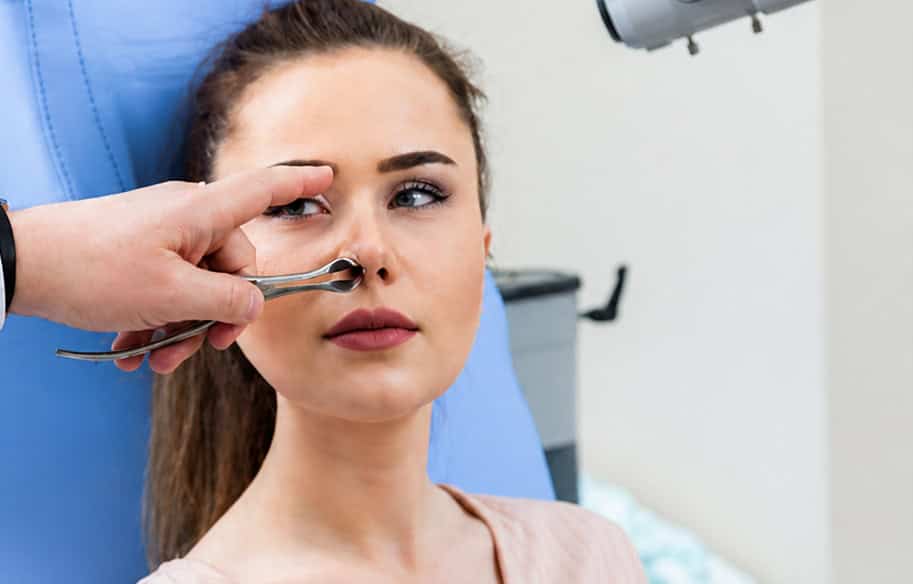
Nosebleeds: Management of Severe or Frequent Epistaxis
Most people experience an occasional nosebleed without cause for concern. But when nosebleeds are frequent, severe, or difficult to control, they can be both distressing and potentially dangerous — and they are rarely without an underlying cause. Expert assessment and targeted treatment can identify that cause and bring the problem under lasting control.
What is Epistaxis Management?
Epistaxis is the medical term for a nosebleed — bleeding from the blood vessels that line the nasal passages. While occasional minor nosebleeds are common and usually harmless, recurrent or heavy epistaxis warrants investigation to identify the underlying cause and prevent further episodes. Treatment ranges from simple in-office cauterisation of a bleeding vessel to more involved surgical or interventional management for severe or arterial bleeding. Dr. Dyrmishi offers a full range of diagnostic and treatment options tailored to the frequency, severity, and cause of each patient’s nosebleeds.

Is This Treatment
RIGHT FOR YOU?
Not every nosebleed requires specialist attention — but some absolutely do. The following will help you determine whether a formal assessment is appropriate for your situation.
Patients who experience nosebleeds that occur more than once a week, last longer than twenty minutes, produce a significant volume of blood, or are difficult to control at home should seek specialist assessment. Those who have been hospitalised for a nosebleed, are taking blood-thinning medication, or have a known bleeding disorder are also appropriate candidates for a thorough evaluation and structured management plan.
Recurrent nosebleeds are rarely random — they typically reflect an identifiable underlying cause, whether structural, vascular, inflammatory, or systemic. Treatment is done to identify and address that cause directly, reducing the frequency and severity of episodes and preventing the risk of a nosebleed that is dangerous or uncontrollable. For patients whose nosebleeds are significantly affecting their daily life or causing anxiety, effective treatment offers genuine and meaningful relief.
How it Works
Management of epistaxis begins with a thorough assessment to identify the source and cause of bleeding before any treatment is planned. The approach is always proportionate to the severity and nature of the problem. Here is what the process looks like:

- Consultation and assessment — Dr. Dyrmishi performs a detailed nasal examination including endoscopy to identify the site of bleeding and any contributing structural or mucosal factors, alongside a review of relevant medical history and medications.
- First-line treatment — Where a specific bleeding vessel is identified, cauterisation — using chemical or electrical means — is performed in the clinic to seal the vessel and prevent recurrence, often resolving the problem in a single appointment.
- Surgical management — For more severe or recurrent epistaxis that does not respond to cauterisation, surgical ligation of the responsible blood vessel or endoscopic arterial ligation may be recommended, performed under general anaesthesia.
- Ongoing management — Where nosebleeds are linked to an underlying medical condition, blood-thinning medication, or a systemic cause, Dr. Dyrmishi works alongside the relevant specialists to ensure a coordinated, comprehensive management plan is in place.
Ready to Book Your Consultation?
Tell us more about your concerns and the service you are interested in. Our team will contact you to schedule your consultation with Dr. Ervin Dyrmishi and provide a free quote for your case.

I visited Dr. Ervin Dyrmishi for ongoing nasal blockage and breathing difficulty. He explained everything clearly, performed a detailed examination, and helped me understand the right treatment options. I felt listened to and confident throughout the process.
My consultation was very professional from start to finish. Dr. Dyrmishi took the time to understand both my medical concerns and aesthetic goals. His approach felt careful, honest, and very personalized.
I came in for sinus problems that had been affecting me for a long time. Dr. Dyrmishi was thorough, calm, and very clear in explaining the diagnosis and next steps. The whole experience made me feel much more comfortable.
I was nervous before my facial procedure, but Dr. Dyrmishi explained the treatment plan in detail and answered all my questions. I appreciated his focus on natural results and making sure everything suited my face.
We brought our child for recurring ear and throat problems, and the consultation was excellent. Dr. Dyrmishi was patient, gentle, and explained everything in a way we could understand. We felt reassured and well guided.
Dr. Dyrmishi combines professionalism with a very human approach. He carefully reviewed my symptoms, explained the examination findings, and gave me a clear plan for treatment. I would highly recommend him.
Our Patients in Their Own Words
Why Choose Dr. Ervin Dyrmishi?
Dr. Ervin Dyrmishi brings together a strong medical background, advanced ENT and head and neck surgery training, and a refined understanding of facial anatomy and aesthetics. He graduated magna cum laude with a joint medical degree from the University “Our Lady of Good Counsel” in Tirana and the University of Rome “Tor Vergata,” and has continued his professional development through international courses in aesthetic and functional septorhinoplasty, rhinology, otology, temporal bone surgery, and head and neck surgery.
His clinical experience includes ENT emergency care, microsurgery, surgical patient management, head and neck procedures, and daily diagnostic evaluation, giving patients a careful, structured, and well-rounded approach to both medical and aesthetic care.

Let’s Make Your Beauty Journey Simple
Faqs
Frequently Asked Questions
A nosebleed should be treated as an emergency if it does not stop after twenty to thirty minutes of sustained direct pressure, if the volume of blood loss is significant, if blood is being swallowed in large amounts, or if the patient feels faint, dizzy, or unwell. In these situations, emergency medical care should be sought immediately. For patients with a history of severe epistaxis, Dr. Dyrmishi will provide a clear plan of action for managing future episodes before they escalate.
Recurrent nosebleeds most commonly originate from a cluster of fragile blood vessels on the front of the nasal septum — an area known as Little’s area — which is particularly vulnerable to drying, trauma, and inflammation. Other contributing factors include nasal allergies, blood-thinning medications, high blood pressure, a deviated septum, nasal polyps, or in rare cases an underlying vascular or bleeding disorder. Identifying the specific cause is the essential first step in effective management.
Cauterisation is performed under local anaesthesia, so the procedure itself should not be painful. Patients may feel mild pressure or a brief sensation of heat, but significant discomfort is uncommon. The nose may feel tender and crusted for a few days afterwards, and patients are advised to avoid blowing the nose forcefully during this period to allow the treated area to heal fully.
In many cases, treating the identified cause — whether through cauterisation, surgery, or management of an underlying condition — significantly reduces or eliminates recurrence. Where a structural cause such as a deviated septum is contributing, correcting this can provide additional long-term benefit. Dr. Dyrmishi will also advise on simple measures such as nasal moisturisation and humidification that can reduce the likelihood of further episodes, particularly in patients with dry or fragile nasal mucosa.
Contact us now!
Book Your Appointment Today
Take the first step toward clearer breathing, improved comfort, or a refined aesthetic result. Dr. Ervin Dyrmishi provides personalized consultations for ENT, head and neck, plastic, and facial aesthetic surgery concerns.
Call +355694069847 or fill out the form to schedule your consultation.
Interested in ENT, Head and Neck, or Plastic Surgery Care?
Tell us more about your concerns and the service you are interested in. Our team will contact you to schedule your appointment and guide you through the next steps.
