
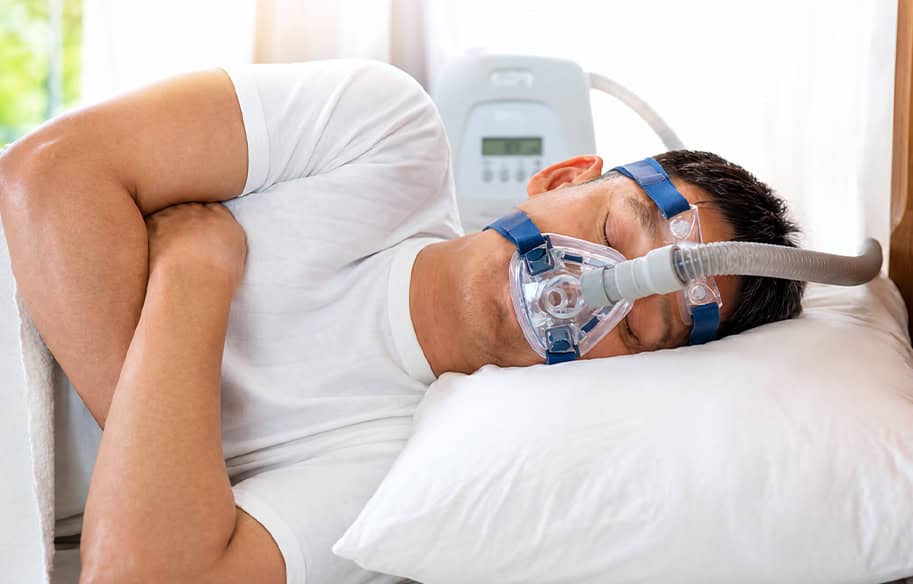
Sleep Apnea and Snoring
Snoring and sleep apnea are far more than a nuisance — they are signs that the airway is being partially or completely obstructed during sleep, with consequences that extend well beyond a disrupted night. From daytime fatigue and poor concentration to serious cardiovascular risk, untreated sleep-disordered breathing deserves expert attention.
What are Sleep Apnea Treatments?
Snoring occurs when the soft tissues of the upper airway vibrate during sleep as airflow becomes partially restricted. Obstructive sleep apnea (OSA) is a more serious condition in which the airway collapses repeatedly during sleep, causing breathing to stop and restart — sometimes hundreds of times per night — without the patient being aware. Dr. Dyrmishi offers comprehensive assessment and management of both conditions, including CPAP therapy, Uvulopalatopharyngoplasty (UPPP), tongue base surgery, and treatment of any underlying nasal or structural factors contributing to airway obstruction.

Is This Treatment
RIGHT FOR YOU?
Sleep-disordered breathing exists on a spectrum from simple snoring to severe obstructive sleep apnea, and treatment is tailored to where a patient falls on that spectrum. The following will help you determine whether a formal assessment is appropriate.
Patients who snore loudly and regularly, experience witnessed pauses in breathing during sleep, wake unrefreshed despite adequate sleep duration, suffer from excessive daytime sleepiness, or have been told they stop breathing during sleep should seek assessment. A formal sleep study is required to diagnose OSA and determine its severity before any treatment is recommended. Risk factors including obesity, a large neck circumference, nasal obstruction, and enlarged tonsils are also relevant to the assessment.
Untreated obstructive sleep apnea is associated with a significantly increased risk of hypertension, heart disease, stroke, type 2 diabetes, and road traffic accidents caused by daytime sleepiness. Beyond these serious long-term risks, the immediate impact on daily life — persistent fatigue, poor concentration, irritability, and relationship strain caused by snoring — makes effective treatment both medically important and life-improving for patients and their partners alike.
How it Works
Management of sleep apnoea and snoring begins with a thorough assessment to establish the severity of the condition and identify the anatomical sites of obstruction before any treatment is planned. Here is what the process looks like:

- Consultation and sleep study — Dr. Dyrmishi reviews your symptoms, risk factors, and sleep history, and arranges a formal sleep study — either at home or in a sleep laboratory — to confirm the diagnosis of OSA and establish its severity.
- CPAP therapy — For moderate to severe OSA, Continuous Positive Airway Pressure (CPAP) therapy is the most effective first-line treatment, delivering a gentle stream of pressurised air through a mask during sleep to keep the airway open throughout the night.
- Surgical management — Where surgery is appropriate — either as an alternative to CPAP or to address specific anatomical contributors to obstruction — options include UPPP to remove excess soft palate and throat tissue, tongue base reduction, tonsillectomy, or nasal surgery to improve airflow, depending on the site and nature of the obstruction.
- Ongoing review — Sleep apnoea is a chronic condition that requires ongoing monitoring; Dr. Dyrmishi provides regular follow-up to assess treatment effectiveness, manage CPAP compliance, and adjust the management plan as needed over time.
Ready to Book Your Consultation?
Tell us more about your concerns and the service you are interested in. Our team will contact you to schedule your consultation with Dr. Ervin Dyrmishi and provide a free quote for your case.

I visited Dr. Ervin Dyrmishi for ongoing nasal blockage and breathing difficulty. He explained everything clearly, performed a detailed examination, and helped me understand the right treatment options. I felt listened to and confident throughout the process.
My consultation was very professional from start to finish. Dr. Dyrmishi took the time to understand both my medical concerns and aesthetic goals. His approach felt careful, honest, and very personalized.
I came in for sinus problems that had been affecting me for a long time. Dr. Dyrmishi was thorough, calm, and very clear in explaining the diagnosis and next steps. The whole experience made me feel much more comfortable.
I was nervous before my facial procedure, but Dr. Dyrmishi explained the treatment plan in detail and answered all my questions. I appreciated his focus on natural results and making sure everything suited my face.
We brought our child for recurring ear and throat problems, and the consultation was excellent. Dr. Dyrmishi was patient, gentle, and explained everything in a way we could understand. We felt reassured and well guided.
Dr. Dyrmishi combines professionalism with a very human approach. He carefully reviewed my symptoms, explained the examination findings, and gave me a clear plan for treatment. I would highly recommend him.
Our Patients in Their Own Words
Why Choose Dr. Ervin Dyrmishi?
Dr. Ervin Dyrmishi brings together a strong medical background, advanced ENT and head and neck surgery training, and a refined understanding of facial anatomy and aesthetics. He graduated magna cum laude with a joint medical degree from the University “Our Lady of Good Counsel” in Tirana and the University of Rome “Tor Vergata,” and has continued his professional development through international courses in aesthetic and functional septorhinoplasty, rhinology, otology, temporal bone surgery, and head and neck surgery.
His clinical experience includes ENT emergency care, microsurgery, surgical patient management, head and neck procedures, and daily diagnostic evaluation, giving patients a careful, structured, and well-rounded approach to both medical and aesthetic care.
Let’s Make Your Beauty Journey Simple
Faqs
Frequently Asked Questions
Snoring alone — without pauses in breathing, gasping, or significant daytime sleepiness — may not indicate sleep apnoea, though it still warrants assessment if it is affecting sleep quality or your partner’s rest. Obstructive sleep apnoea is diagnosed through a formal sleep study, which measures breathing patterns, oxygen levels, and the frequency of apnoeic episodes during sleep. This is the only reliable way to confirm the diagnosis and determine its severity — and it is an essential step before any treatment is recommended.
Surgical outcomes for sleep apnoea depend heavily on careful patient selection and accurate identification of the sites of obstruction. Surgery is most effective when it targets the specific anatomical factors contributing to a patient’s airway collapse — which is why thorough pre-operative assessment is essential. In appropriately selected patients, procedures such as UPPP and tongue base surgery can produce significant and lasting reductions in OSA severity, though CPAP remains the gold standard for moderate to severe disease.
CPAP intolerance is common, particularly in the early stages of treatment, but most patients can be helped to adapt with the right support — including mask fitting adjustments, pressure titration, and guidance on acclimatisation. For patients who genuinely cannot tolerate CPAP despite adequate support, surgical options and mandibular advancement devices are available alternatives. Dr. Dyrmishi will always explore every appropriate option before concluding that a particular treatment is not suitable for a given patient.
Yes — obstructive sleep apnoea is relatively common in children and is most frequently caused by enlarged tonsils and adenoids. In children, symptoms may include loud snoring, restless sleep, bedwetting, behavioural problems, and poor school performance — rather than the daytime sleepiness more typical in adults. Tonsillectomy and adenoidectomy resolve OSA in the majority of affected children and can produce dramatic improvements in behaviour, mood, and academic performance. Dr. Dyrmishi has extensive experience managing sleep-disordered breathing in paediatric patients.
Contact us now!
Book Your Appointment Today
Take the first step toward clearer breathing, improved comfort, or a refined aesthetic result. Dr. Ervin Dyrmishi provides personalized consultations for ENT, head and neck, plastic, and facial aesthetic surgery concerns.
Call +355694069847 or fill out the form to schedule your consultation.
Interested in ENT, Head and Neck, or Plastic Surgery Care?
Tell us more about your concerns and the service you are interested in. Our team will contact you to schedule your appointment and guide you through the next steps.
